
Analysts rebuilt one person from 8+ systems, and risk scores came with no reason.
Problem
What I did
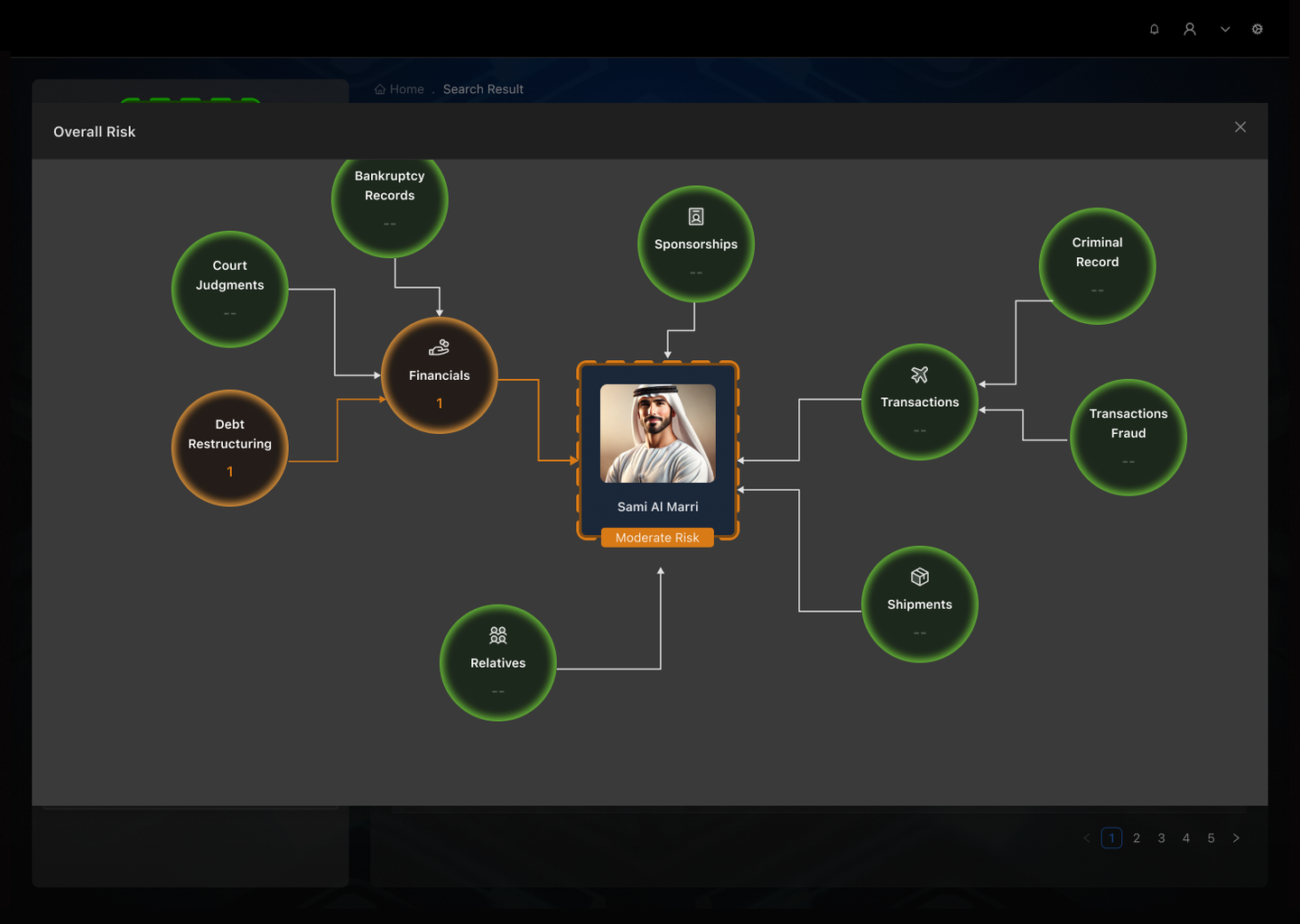
I owned research, IA and UI, and turned risk into a map that traces every rating.
Impact
One search, one profile and one shared way to read risk.
8 → 1
systems to one search
X → Y min
per case review, before and after
3
risk levels, one rule set
02 · PROBLEM
A score nobody could explain
Opening a case meant switching tools and copying details by hand. When a rating said high, the analyst still had to dig through every system to justify it.
“Show me why, not just how much.”
Analyst, discovery interview
03 · IDEAS I REJECTED
Three sketches, two dropped
✕ One big table
Complete, but no story. Rejected in the first review.
◐ Cards per source
Clearer, but risk still hidden. Kept as the overview.
✓ Risk as a map
Every rating shows its reason. Chosen.
04 · KEY FLOWS
Problem, then solution, for each flow
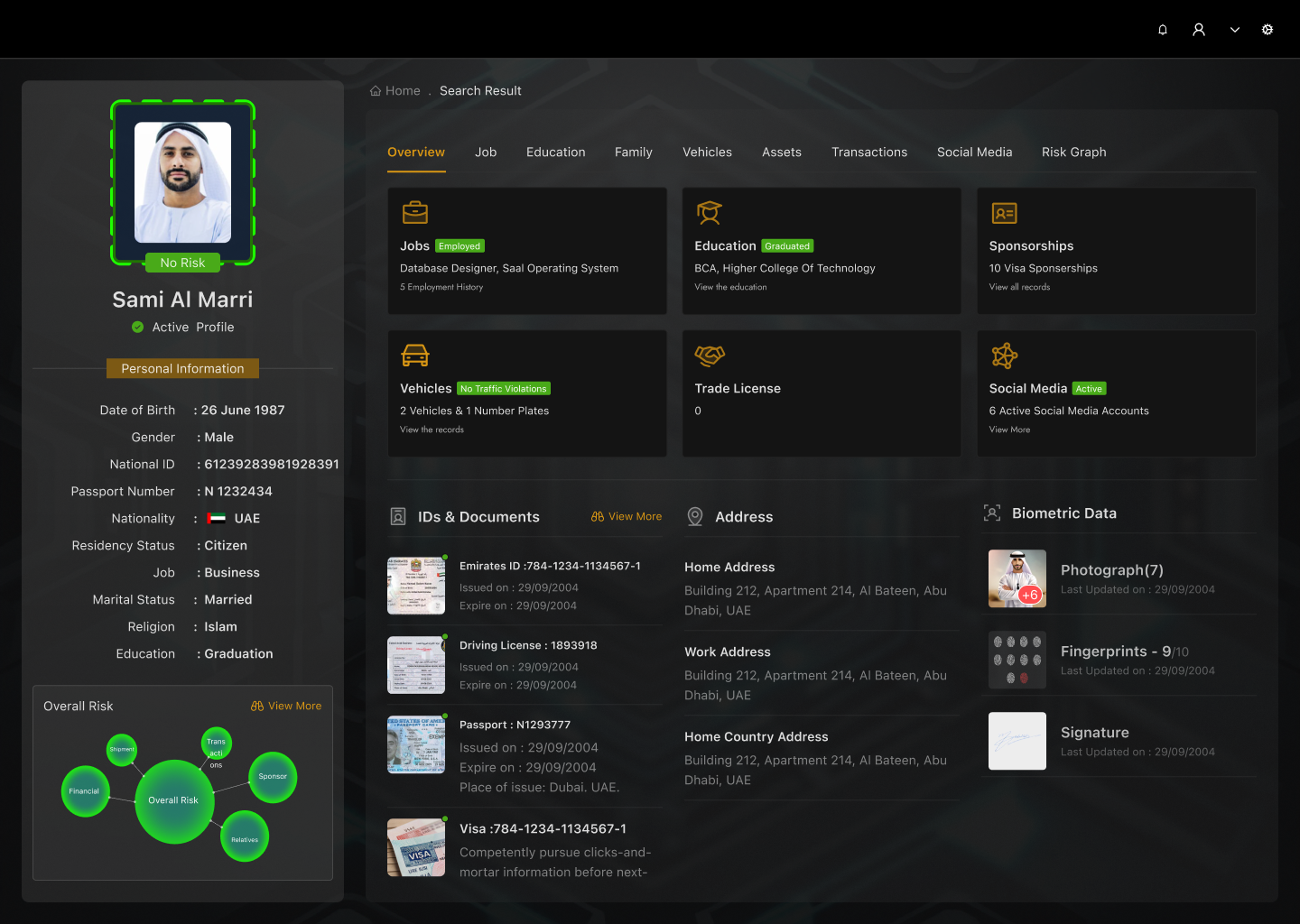
FLOW 01 · PROFILE OVERVIEW
Problem
Tables buried the story of a person.
Solution
One card per source with a status badge and a link into the record.
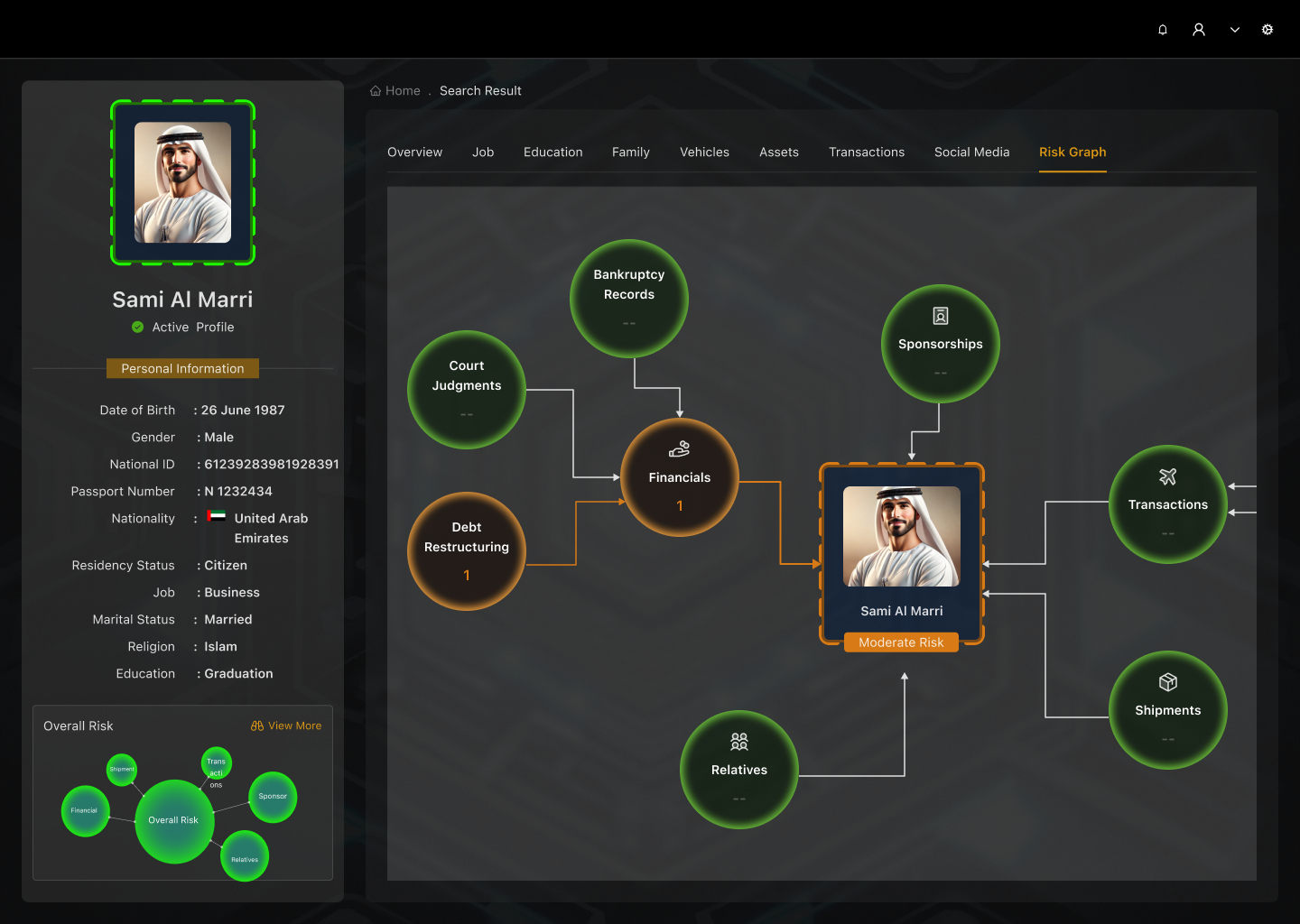
FLOW 02 · RISK GRAPH
Problem
Scores had no reason behind them.
Solution
A map inside the profile, so analysts never leave the person.
05 · IMPACT
What the data intelligence platform changed
X%
less time per case review
8+
record sources in one profile
1
dark design system for every module
06 · WHAT I LEARNED
Show the why.
Trust came from traceable reasons, not a better score.
Test earlier.
I would put the map in front of analysts in week one, with their real cases.